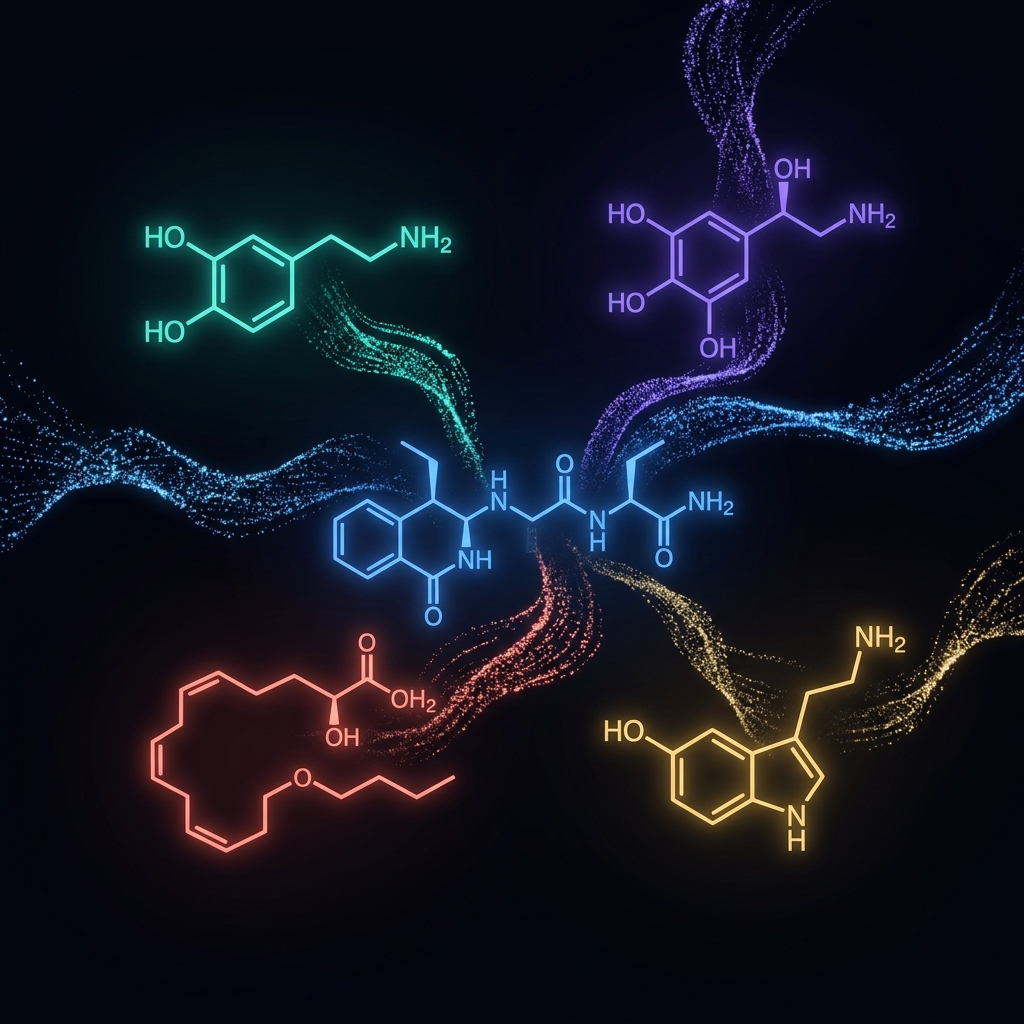
Flow state — that feeling of effortless concentration where hours pass like minutes and your output quality skyrockets — isn't mystical. It's neurochemical. And understanding exactly what happens in your brain during flow is the first step to accessing it more reliably.
The McKinsey Number
A ten-year study by McKinsey found that executives are 500% more productive when in flow state. Five times their normal output. The study was published in the McKinsey Quarterly (worth noting: it's not peer-reviewed), but it aligns with a body of research showing dramatic performance gains during flow.
Despite this massive boost, most people spend less than 5% of their work-life in flow. Some executive surveys suggest it's less than 10%. If a workplace could increase time in flow by just 20%, overall productivity would almost double.
The gap between where we are and where we could be is enormous.
The 5-Chemical Cocktail
Flow is one of the only states where your brain releases five potent neurochemicals simultaneously. Each one enhances a different dimension of performance:
Dopamine sharpens focus, drives motivation, and amplifies pattern recognition — letting you link ideas together faster than normal. It's the "this is interesting, keep going" chemical.
Norepinephrine acts as the brain's adrenaline. It tightens focus, increases hyper-vigilance, and accelerates data acquisition. You're literally absorbing information faster.
Endorphins are powerful natural painkillers that reduce physical and mental discomfort. They create feelings of well-being and let you push harder for longer without feeling the strain.
Anandamide — an endogenous cannabinoid — elevates mood, decreases fear, and accelerates lateral thinking. It widens the database your brain searches for creative connections. This is why flow produces those "aha" moments.
Serotonin enhances lateral thinking and provides the peaceful, satisfying afterglow once flow ends. It's the "that was amazing" feeling that makes you want to return to the state.
The Learning Accelerator
Flow doesn't just make you more productive — it makes you learn faster. Dramatically faster.
A study by the University of Sydney found a 420% increase in creative problem-solving while in flow. In studies conducted by DARPA and Advanced Brain Monitoring, artificially inducing flow led to a 230% increase in skill acquisition and cut the time required for novice military snipers to become experts by 50%.
Harvard researchers discovered that flow's heightened creativity doesn't stop when the state ends — it lasts for up to three days afterward. The neurochemical changes literally alter how your brain processes information for days.
The Fragility Problem
Here's the catch: flow is extraordinarily fragile. It takes approximately 15 to 20 minutes of uninterrupted concentration to enter flow. The average office worker is interrupted every 11 minutes.
Do the math. If you need 15–20 minutes of unbroken focus and you're interrupted every 11, you may never enter flow at all. And once knocked out, it takes another 15–20 minutes to get back in — if you can return at all.
This is why "open office" environments, constant Slack notifications, and back-to-back meetings are so destructive. They don't just reduce your time in flow — they can eliminate it entirely.
Engineering Flow
You can't force flow, but you can create the conditions that make it likely:
1. Protect 90-minute blocks. Flow requires unbroken concentration. Block 90-minute windows, silence notifications, and make yourself unreachable.
2. Match difficulty to skill. Flow occurs when a task is roughly 4% harder than your current ability. Too easy and you're bored. Too hard and you're anxious. The sweet spot is slight stretch.
3. Align with your circadian peak. Flow is dramatically easier to access when your brain is already at its daily performance peak. Working in your biological trough and expecting flow is like trying to sprint with weights on.
4. Fuel the biology. Sleep, hydration, nutrition, and HRV all feed into flow readiness. If your foundational biology is compromised, the neurochemical cocktail can't fire properly.